
Menu
Strategic Upgrades to Belize’s Northern Arterial Road for Economic Growth, Environmental Resilience and Improved Road Safety
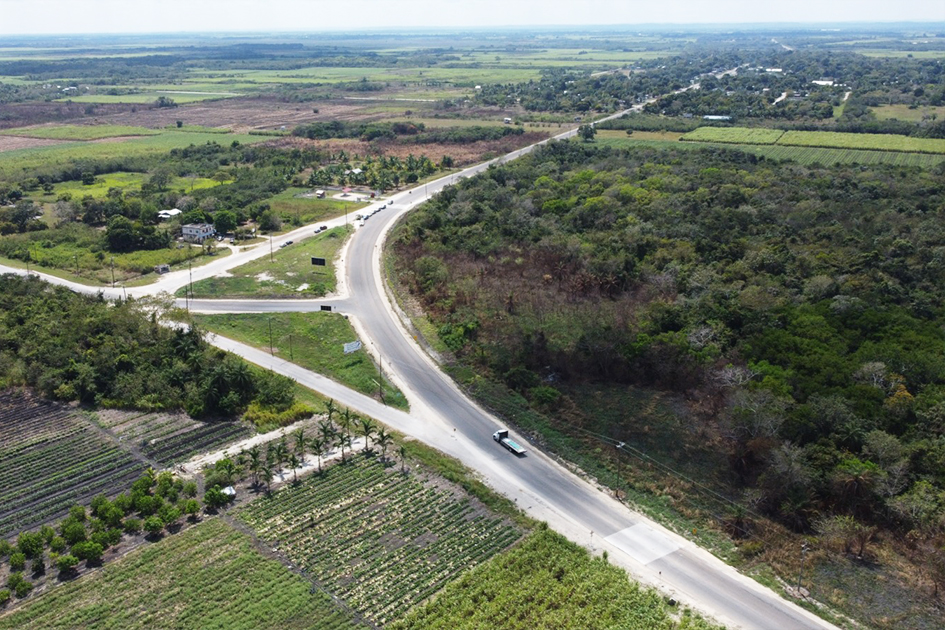
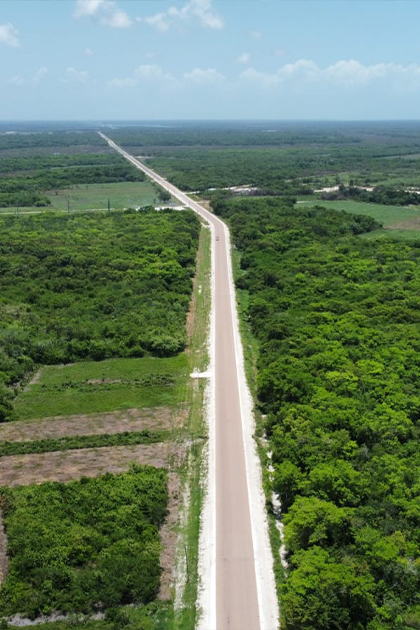
The Philip Goldson Highway (147 km) is Belize’s busiest main road, connecting Belize City to the Mexican border and serving over half of the country’s population across the Belize, Orange Walk, and Corozal districts. It is essential for tourism, agriculture, and manufacturing, but deteriorated infrastructure, poor drainage, and unpaved bypasses have caused major safety, health, and operational issues, including high fatality rates and economic losses. The rehabilitation and upgrading of the PGH aimed to improve connectivity, reduce travel times, enhance safety, and support economic growth and national productivity.
EENR 2024 Global Best Projects Award
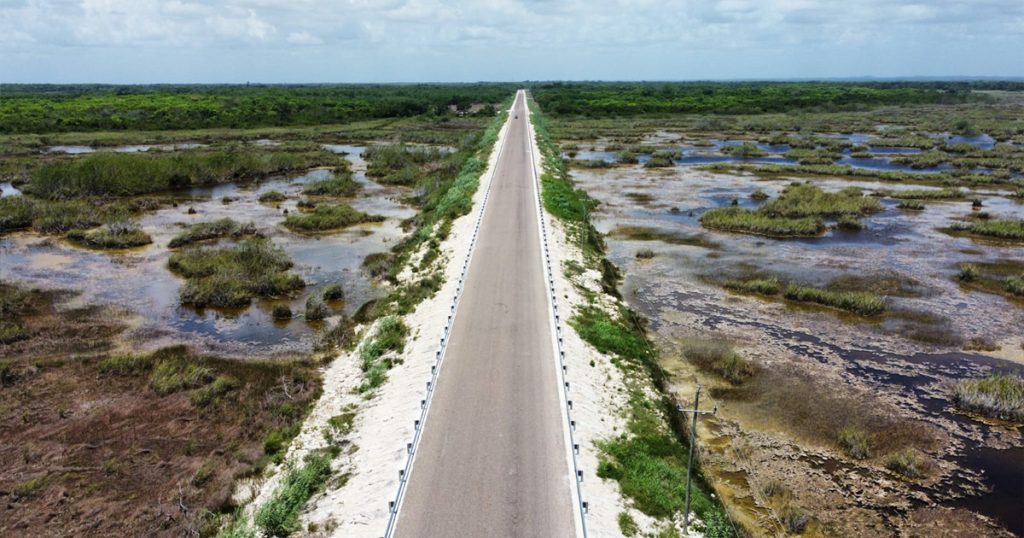
The Philip Goldson Highway (PGH) is a 147 km arterial road and one of Belize’s main transport corridors, linking Belize City to the Mexican border. It serves the Belize, Orange Walk, and Corozal districts, which account for 56% of the national population, and crosses diverse coastal plains and ecosystems.
The highway supports high traffic volumes, including heavy goods vehicles serving tourism, manufacturing, agriculture, and services. Heavy traffic through Corozal town and the use of the unpaved Remate–San Pedro bypass raise safety and health concerns. While the main bridges are in generally fair condition, significant portions of the pavement show deterioration and require reconstruction and drainage improvements.
Road safety along the corridor is poor, with high fatality rates and economic losses. Upgrading the highway is expected to enhance safety, reduce travel times, and stimulate economic growth, particularly benefiting agriculture and tourism in the northern districts.
The consultancy’s objective is to support the Government of Belize in procuring contractor(s) for the rehabilitation of the northern 127 km section of the PGH and to provide project management, supervision, contract administration, and post-construction reporting throughout implementation, including the defects liability period.
Pre-construction Phase: Assisting GOBZ during the Prequalification and Bid Period. This includes the evaluation of prequalification documents and preparation of a Prequalification Evaluation Report, conducting a site visit with prospective bidders, responding through the Ministry of Infrastructure, Development and Housing (MIDH) to queries raised by bidders during the Bid Period, evaluating bid submissions and presenting a comprehensive Bid Evaluation Report with recommendations to MOW, who will lead the negotiation process with the first-ranked contractor, and providing assistance with establishing a contract with the contractor.
Construction Phase: carrying out the supervision services related to the Philip Goldson Highway Upgrading Project which consists of the works from Biscayne Village at mile 24.5 to the Santa Elena Border at mile 92, which is approximately 109 km of existing paved road, as well as the upgrading of the Remate Road Bypass; approximately 18km of existing gravel road. The project also includes upgrading the drainage system by constructing new higher capacity culverts and replacing select existing ones.
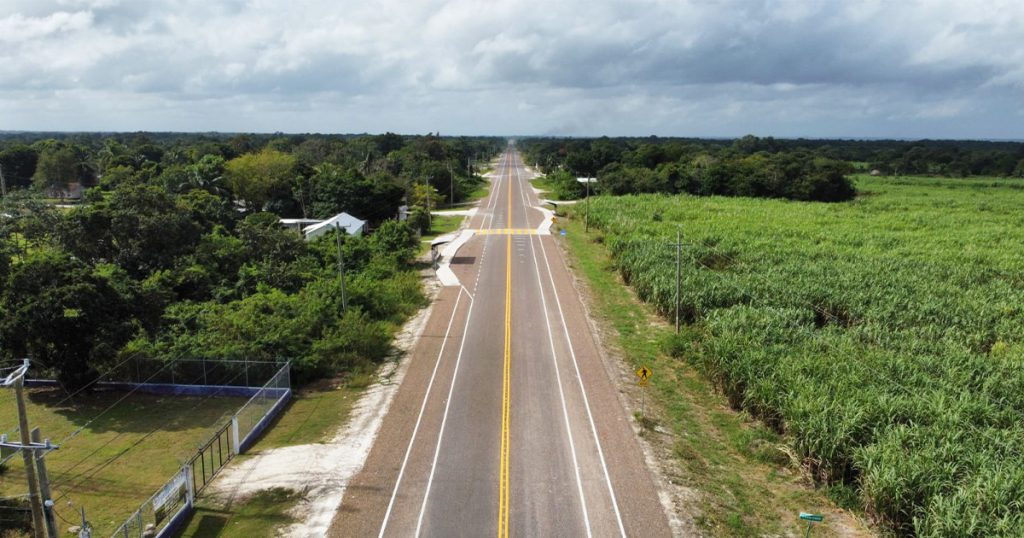
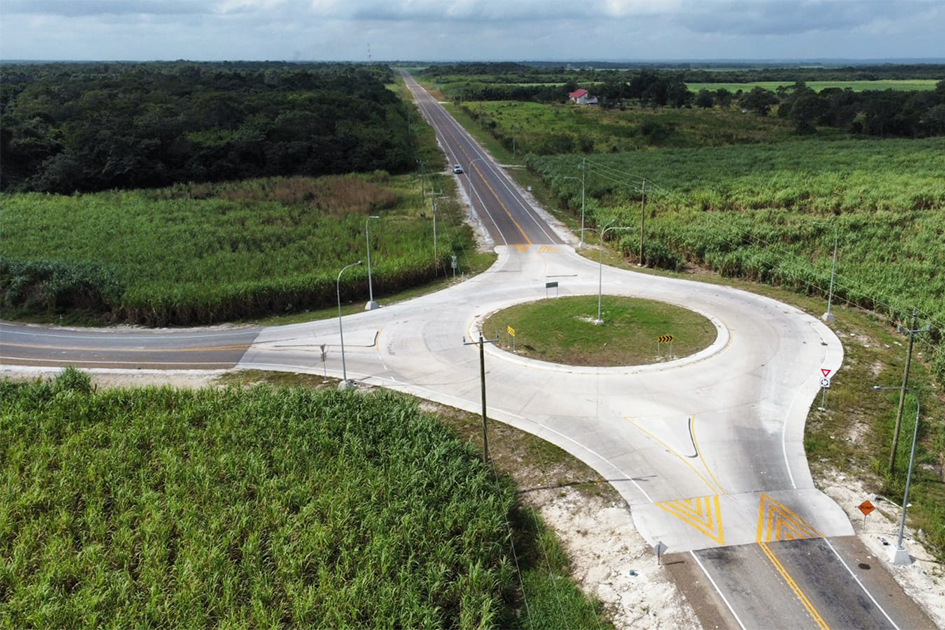
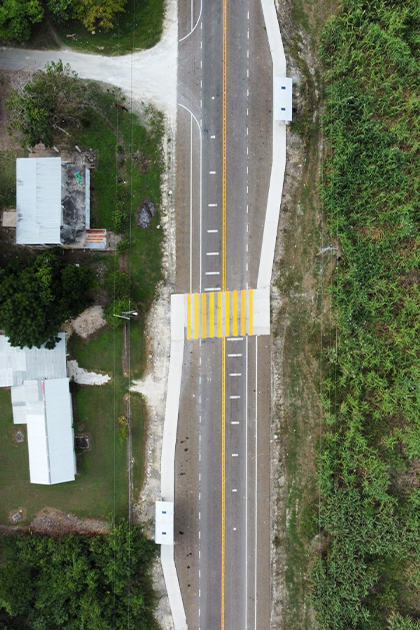
The upgrading of the Philip Goldson Highway encompasses multiple sections aimed at enhancing road safety, climate resilience, and overall functionality. The works include shoulder widening, pavement strengthening with DBST pavement, and the implementation of traffic calming measures such as pedestrian and bicycle paths, pedestrian crossings, rumble strips, bus lay-bys, and roundabouts at key junctions like Carmelita Village, BSI-M1 Junction, Crooked Tree, and the Remate Road Intersections. Road safety features include line markings, road studs, traffic signs, and rumble strips, ensuring safer mobility across all sections.
Drainage improvements are a critical component, with new structures designed for the highway, side roads, and driveways to enhance climate resilience. Specific interventions include upgrading gravel roads to paved international standards, particularly along the Remate Road Bypass and its intersections, as well as addressing critical areas along the entire route, from Km 0+000 (Mile 24.5) near Orange Walk Town to Km 104+198 at the Santa Elena Border.
2026 POLITECNICA INGEGNERIA ED ARCHITETTURA SOCIETÀ COOPERATIVA ® | ISC. REG. IMPRESE DI MODENA - PI 00345720361