
Menu
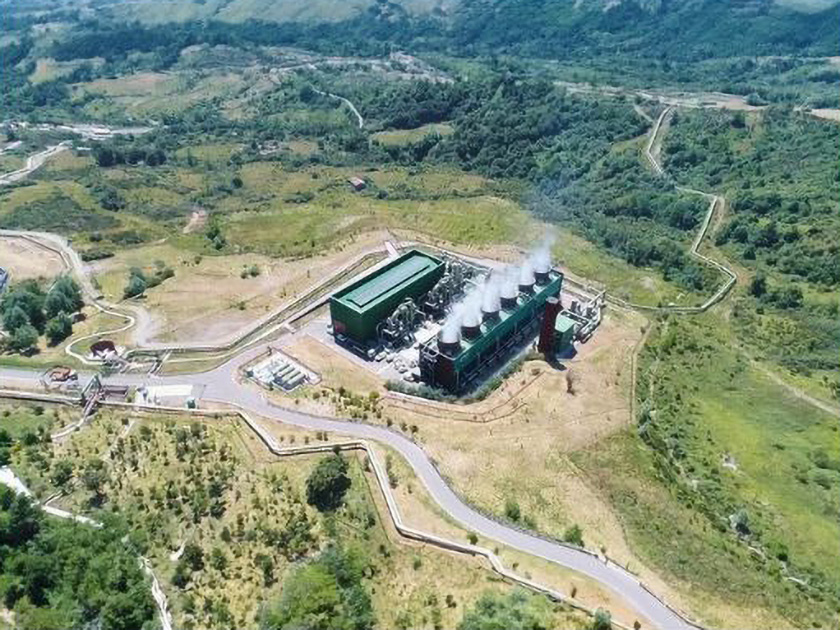
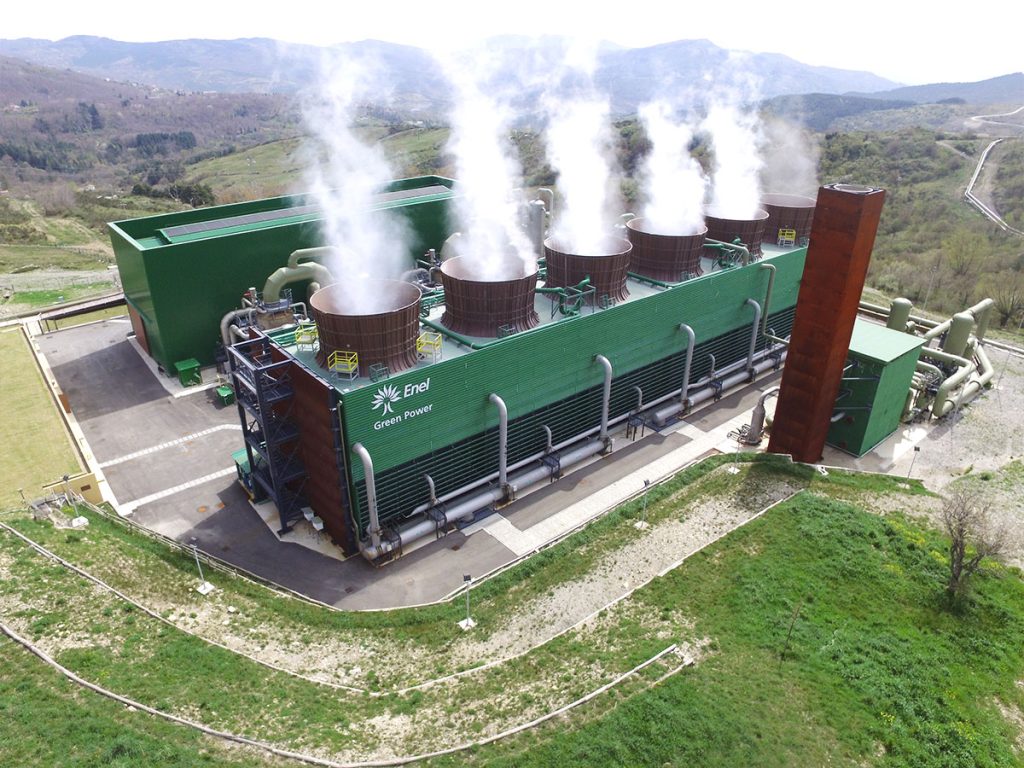
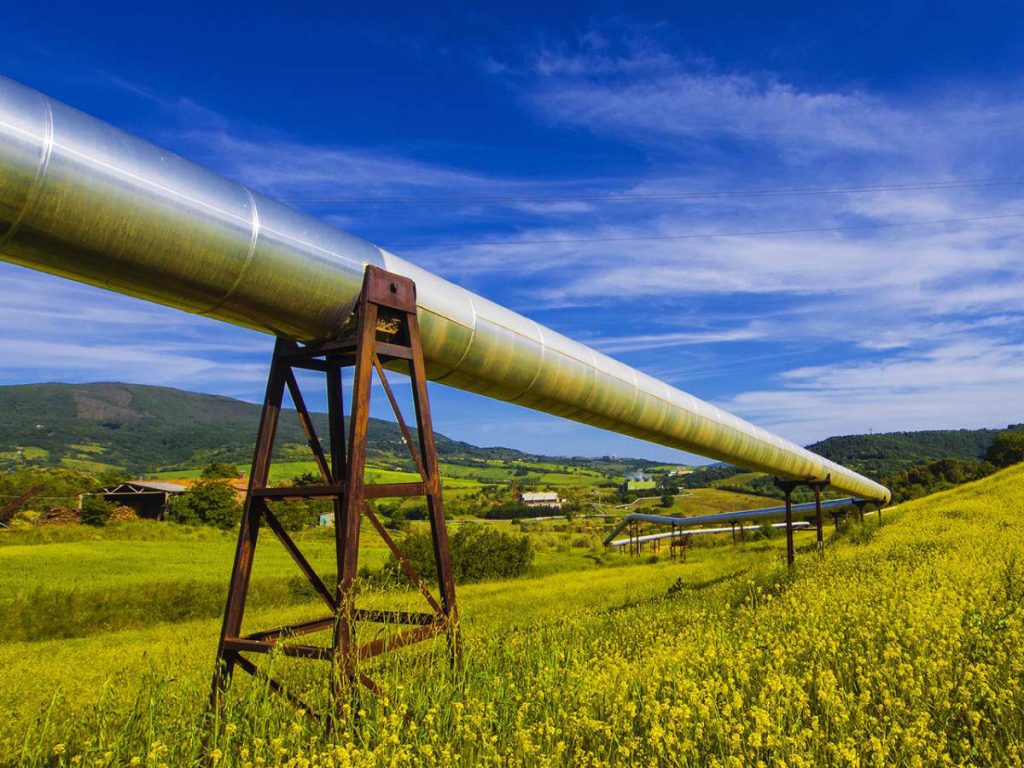
This project for the construction of a new geothermal power plant 4 has been developed as part of the initiatives undertaken by Enel to optimize the exploitation of the geothermal resource.
The geothermal complex is sited in the municipality of Santa Fiora, between the rivers Albegna and Fiora, which separates the Amiata from Labbro mountain. The proximity to the other power plants Bagnore 2 (now an electrical station) and Bagnore 3 (a power plant built in the late 1990s) allows for a precise layout where the architecture of the power plant fits perfectly into the territory, alongside the specific and typical tourist activities of the area.
The Bagnore 4 power plant plays the role of a natural enhancement of the production site for the exploitation of the geothermal basin of Mount Amiata on the southwestern slope adjacent to the existing Bagnore 3 power plant. The project features 2 dialoguing plants forming a single geothermal complex for electricity production (functionally independent).
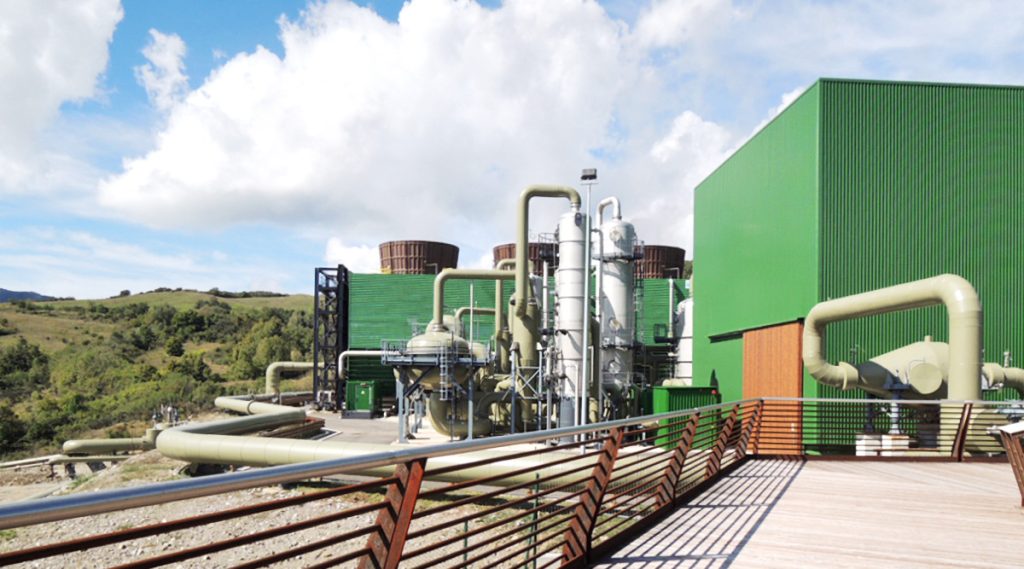
The Bagnore 3 and Bagnore 4 power plants are connected by a tourist trail, with over 700 meters walkways, demonstration plants, information panels and a lookout point, always open and usable for free.
With a yard of about 7.000 square meters, the Bagnore power plant turns out to be among the largest Italian plants to produce electricity from geothermal sources, with an excellent rated power/plant surface ratio. The design has integrated engineering works with related access roads as well as mitigation and compensation works for the impacts generated.
A complex deep drainage system, retaining and control works, and surface water regimentation not only made it possible to secure a slope with medium to high hydrogeological criticality, but also allowed the plant works to be built on superficial foundations with consequent optimization of the construction site stages. Almost all the elevated structures are made of painted steelwork for higher environmental compatibility (100% recyclable) and easier disposal at the end of the plant's useful life. The variable-width footbridge and the 30 meters high chimney are works of engineering and architectural value.
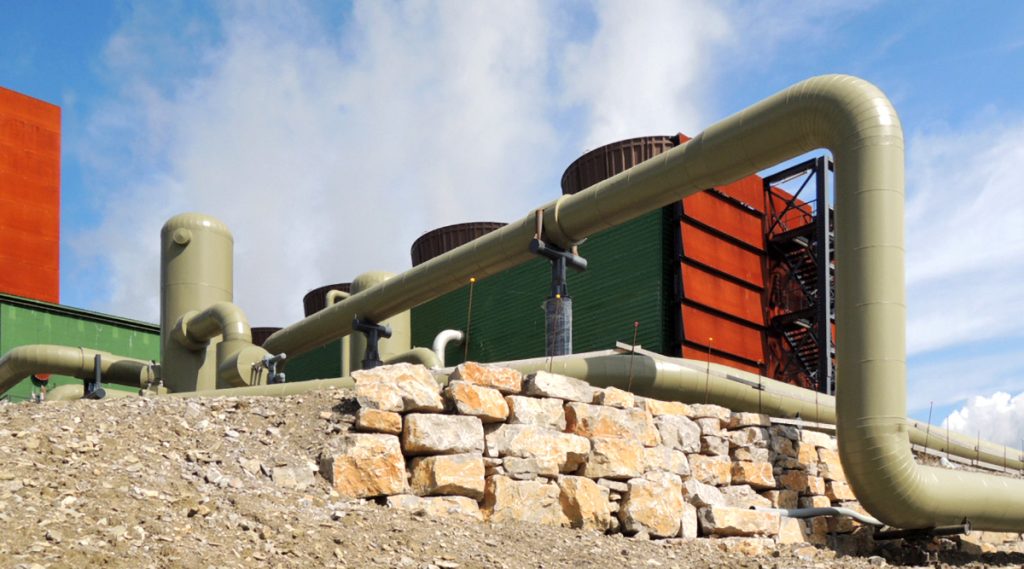
Among the complementary works, noteworthy are the tourist-educational routes around the power plant with a walkway overlooking the valley. The paths intertwine with the geothermal resource conveying pipes, allowing the visitor to discover the secrets of the power plant.
Green works covering an area exceeding 4 hectares mitigate the visual impact of some elements of the plant thus contributing to the reconnection between the pre-existing natural setting and the production site. The green roof of the switchboard/control room, the cladding of all concrete works with natural materials (stone and wood), light-coloured outdoor paving, and the shielding of vertical elements with micro-perforated, self-protective steel sheet metal panels show the care for finishes and architectural aspects the design is pervaded with.
The power plant consists of 2 units of 20 MW, with a total capacity of 40 MW, complementing the 20 MW unit of Bagnore 3, built in 1998. Bagnore 4's annual production of electricity from renewable sources is about 310 million KWh. Bagnore 4's production results in annual savings of 70 thousand TOE (tons of oil equivalent) and of the related climate-changing gas emissions, net of those naturally produced by each geothermal event.
The Bagnore 4 power station is equipped with two AMIS plants (Mercury and Hydrogen Sulfide Abatement) and an innovative ammonia abatement system, which is operational for both Bagnore 3 and Bagnore 4. When constructed, Bagnore 4 was one of the most innovative and technological plants in the world, equipped with: a sophisticated monitoring system, remote diagnostics, and well regulation.
About 130 people from various Italian engineering and architecture firms were involved during the design stage.
When fully operational, the power plant has increased Enel Green Power's workforce by about 40 units as part of the company's recruitment plan. All materials, used in the construction of the power plant, are "Made in Italy". Geothermal energy is the only renewable one whose process is completely Italian, from the research, exploration phase and drilling until production and maintenance.
2026 POLITECNICA INGEGNERIA ED ARCHITETTURA SOCIETÀ COOPERATIVA ® | ISC. REG. IMPRESE DI MODENA - PI 00345720361